I ran a survey on AI writing vibes for fun, and now I'm hardcore thinking about theory of mind

Last week I wrote about how we infer a supernatural entity to the thing behind the AI cursor. This week I'm writing about how our brains freak out when we think there's nobody home behind the cursor.
AI writing vibes
For reasons various and rather banal, AI writing has been much on my mind. Partly because, like many of you, the sheer volume at which I am now using and encountering it on a daily basis is forcing AI pattern recognition upon my sometimes unwitting, sometimes unwilling brain.
So, purely for laughs, I took this question (or some version of it) to the masses: What are the vibes, to you, of obviously AI writing?
Mainly, I wanted to see the fun metaphors and analogies that folks would come up with. Here were some that stuck out:
It makes me think of endless ripples on water without any kind of rough edges.
It reminds me of a Bach fugue that is bound strictly by the 17 rules of formal harmony.
Reading AI writing is like driving a car down familiar streets. Just like you lose awareness of signalling, mirror checking and turning, you lose awareness of the words and the arguments and they just seem to wash over you. And then, just as you don't remember getting to your destination, you don't remember what you read either.
As you can see, a good number of the responses circled around this theme of the eerie stillness and perceived sameness of output that LLMs generate – precisely because they are built on statistical probability for the thing that should be said given what came before. And that is obviously not how humans communicate.
When we communicate, we are also looking to express, and we are participating in a kind of performance for a real or imagined audience. This is where I believe Theory of Mind comes in: when humans communicate – including when we are engaging in the act of reading or writing – our brains are usually trying to understand what is going on in the mind of another, like one's interlocutor, the writer of a text, or the characters in a narrative.
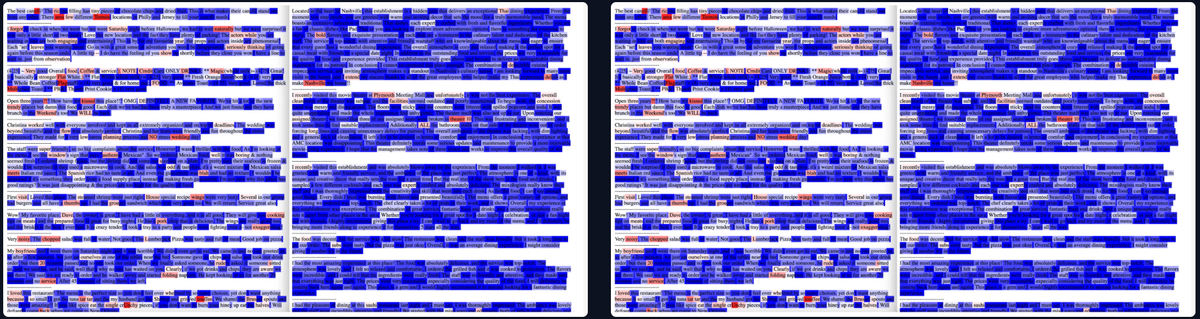
This key difference between purely probabilistic forms of communication (LLMs) and more socially performative/socially informed ones (humans) is no doubt why AI-generated text feels so different from that generated by humans. For instance, this performativity probably explains why human-written content is higher in "perplexity" and "burstiness" than AI-written text, two concepts that have been used in some AI-detection models to check whether a text is AI-generated or not. (The ELI5 definition of these two things, by the way, is that perplexity, in probability theory, deals with how well a model predicts a thing. And burstiness is the rate of perplexity in a given sample. OK, maybe that's more of an ELI18. Anyway.) All of this is to say – there seems to be more statistically improbable stuff, and more variability in the pattern of that statistically improbable stuff, in human writing than AI writing.
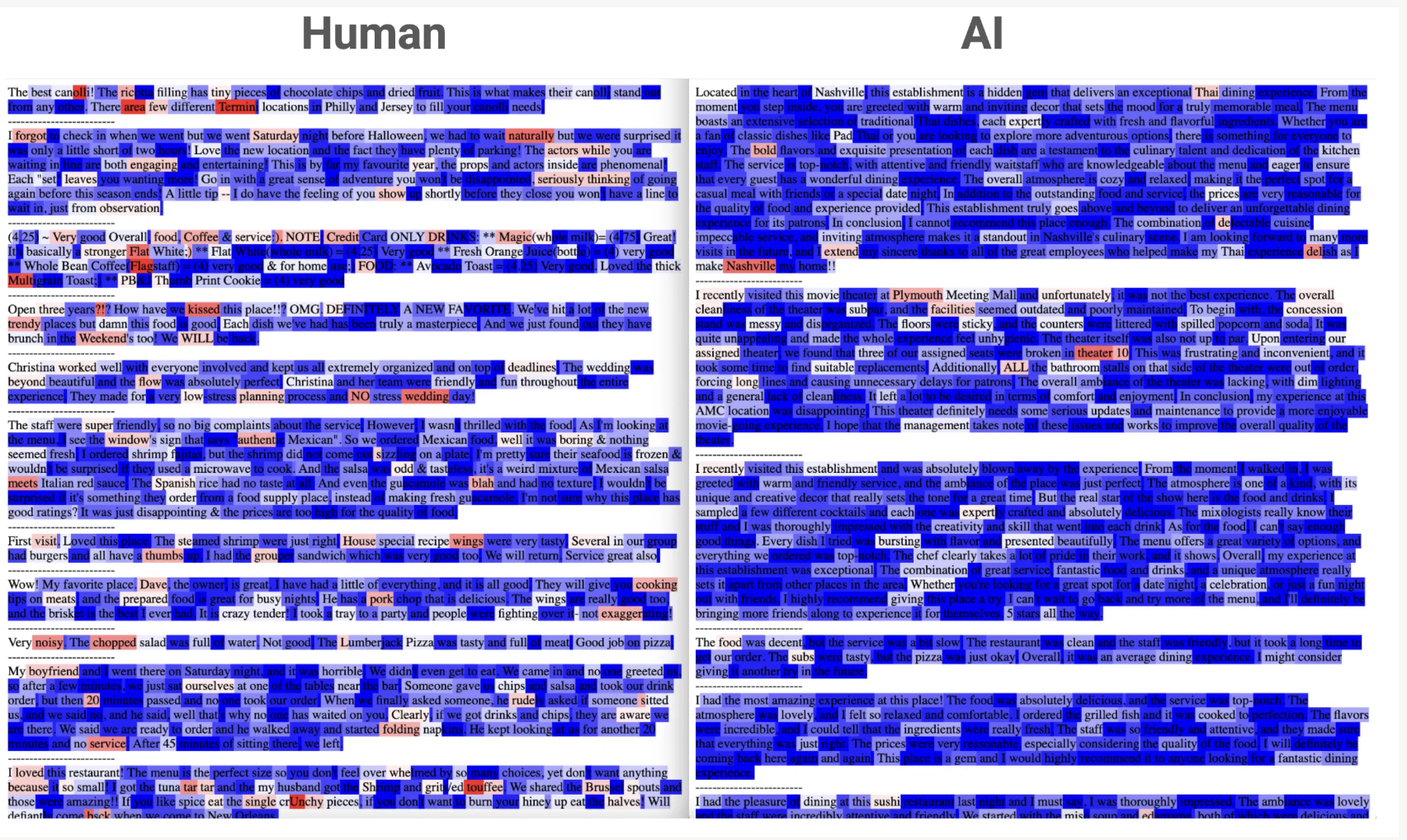
But all of this got me thinking... WHY are we so bothered by the vibes of AI-generated text if it is functionally doing the work that we need it to do? Does it go beyond an abhorrence of sameness in textual output? Is there a part of our brain, for instance, that is wired to process linguistic vibes as much as there is a part of the brain to process syntax and semantics?
Your brain wants to know that there's a light on in the attic

I grew up in the U.S., where Shel Silverstein was a major part of my childhood reading diet. One of my faves was a book of poems called A Light in the Attic, whose eponymous poem reads:
There's a light on in the attic.
Though the house is dark and shuttered,
I can see a flickerin' flutter,
And I know what it's about.
There's a light on in the attic.
I can see it from the outside,
And I know you're on the inside... lookin' out.
Now I'm not a cognitive scientist or psycholinguist by training, but I suspect that Theory of Mind is a necessary part of language and communication for us (being the social and culturally contextualized creatures that we are), and I suspect that some parts of our brains – the parts that do Theory of Mind processing – freak out when they realize that there's no light on in the attic: no hint of intention, mind, or meaning driven by an actual internal mental state that we, on the "outside," are trying to interpret.
Theory of Mind – the act of interpretation of inner lives – is critical to human language, communication, and processing. Our sense of the absence of this is what leads us to the feeling of the Uncanny Valley – close, but not close enough. We need friction in communication. The way that our brains are literally wired to constantly interpret the intent and mental states of others requires this friction – some kind of gap between what is inside the mind of another and how a piece of communication is received. Without this friction, this gap, this "burstiness" and statistical improbability that actually characterises human content, the parts of our brains that crave interpretation in how we communicate and understand others suffer.
I have written about the importance of friction before in the context of search and information-seeking behavior, but friction in communication feels just as necessary and maybe even more hard-wired into how our brains operate. That extensive and empathic act of reaching out metaphorically to the other, to imagine their hidden motivations, and postulate an entire world of experience: this is what it would take to lift us out of the uncanny valley and into the imperfect and improbable world of the real.
In lieu of a "what I'm reading/watching/listening to" this week, I leave you with some absolute gems of linguistic history and speculation.
🧠 The English word "brain" probably means "mush" and may be linked to "bran" which in turn was a borrowing, maybe from an Old French word that meant "refuse, rejected matter." The same OUP blog author somewhat wryly notes that, One of the British English regional words for “brain” is pash, otherwise defined as “rotten or pulpy mass; mud, slush.” So the next time you say "my brain is mush" or "my brain is slush" you may in fact be expressing a tautology.
💩 Slightly related to the theme of refuse: my college Latin teacher once told us that the words "shit" and "science" both share the same linguistic origins. Both come from the Indo-European root skei-, meaning something like "to cut or split" (and maybe also therefore to sift). I have ever since loved the idea that the act of sifting is literally foundational to the acts of both shitting and doing science.
You're welcome.